Kerala food: what to eat, and what a sadya is
Appam, puttu, avial, fish curry and the banana-leaf feast, plus how to navigate spice levels and eat vegetarian.
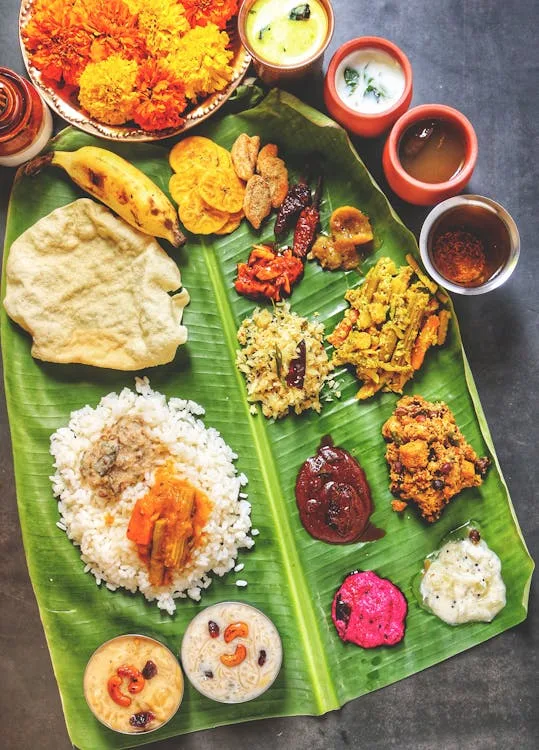
Kerala cooking is built on rice, coconut in every form, and a short list of aromatics: curry leaves, mustard seeds, shallots, ginger, green chilli and black pepper, which grew here long before it travelled anywhere else. Meals are fresh, layered and, in most homes, eaten with the hand.
Breakfast
- Appam, a lacy fermented rice pancake with a soft centre, usually served with vegetable or meat stew.
- Puttu, steamed cylinders of rice flour and coconut, eaten with kadala curry or a banana.
- Idiyappam, delicate rice noodle nests, with curry or coconut milk.
- Dosa and idli, familiar across south India, with chutneys and sambar.
The dishes to look for
- Avial, mixed vegetables in coconut and yoghurt, gently spiced.
- Thoran, finely chopped vegetables stir-fried with grated coconut.
- Meen curry, fish in a tangy sauce sharpened with kudampuli, a smoked sour fruit.
- Kappa, mashed tapioca, traditionally eaten with fish curry.
- Kerala parotta, a flaky layered flatbread, usually eaten with a curry.
- Malabar biryani, milder and more fragrant than northern versions.
- Payasam, a sweet milk or coconut pudding served at celebrations.
Sadya: the banana leaf feast
A sadya is a vegetarian feast served on a banana leaf, with rice in the middle and a ring of small dishes around it: pickles, pappadam, thoran, avial, sambar, rasam, payasam and more. It’s the centrepiece of Onam, Kerala’s harvest festival, but you’ll find it at weddings and in restaurants year-round.
Two things to know: the narrow end of the leaf goes to your left, and dishes are eaten in a rough order, mixing a little of each with rice as you go. Folding the leaf towards you at the end signals that you enjoyed it.
Eating vegetarian or vegan
Kerala is an easy place to eat vegetarian: a large part of everyday cooking already is. Vegan takes slightly more care, since coconut milk is common but dairy appears in payasam, curd and some breakfasts. Say so clearly when you order, and ask whether ghee has been used.
Spice, and asking for less of it
Kerala food is spiced rather than uniformly fiery, but chilli is real here. “Less spicy, please” is understood almost everywhere, and coconut rice, curd or a banana will calm your mouth faster than water.
Eating well as a traveller
Choose busy places where food is cooked fresh and turns over quickly. Be a little cautious with ice and raw salads in your first days. Drink more water than you think you need, and try the tea: strong, milky and sweet, poured from height to cool it.
On our retreat, Kerala meals are included every day in both Fort Kochi and Munnar, cooked with local ingredients. Tell us about dietary needs when you book and we’ll plan around them. See what else is included.