Hatha or Vinyasa: what is the difference?
Two words you will see on every retreat timetable, what each actually means in class, and which suits you.
Almost every retreat timetable lists Hatha, Vinyasa, or both. The words are used loosely, so here is what they usually mean once you are on the mat.
Hatha
Strictly speaking, hatha yoga is the broad tradition that all physical yoga comes from, which is why nearly every posture class is technically hatha yoga. In practice, when a timetable says “Hatha”, it means a slower class: postures held for several breaths, time to set up each one, and pauses between them.
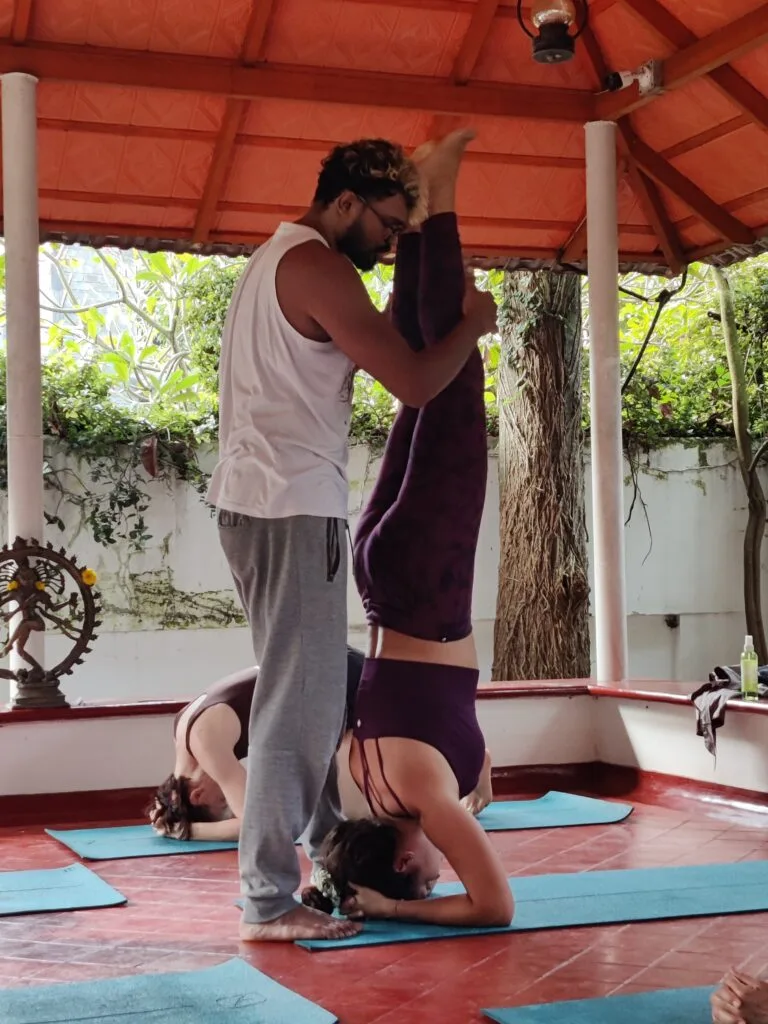
That space is the point. You can feel where your weight is, notice what your breath does, and receive an adjustment without rushing on. Slower does not mean easier: holding a posture for a minute asks a lot.
Vinyasa
Vinyasa links postures into sequences, with one movement per breath, so the class flows. It grew out of the Ashtanga tradition and tends to build heat and rhythm. Sun salutations are the sequence most people meet first.
Flowing classes feel more physical and can be closer to exercise in tempo, although a well-taught Vinyasa class still leaves room for breath and stillness.
Which suits you?
- New to yoga? Hatha is usually the gentler introduction, because you learn the shape of each posture before stringing shapes together.
- Want to build strength and stamina? Vinyasa is more continuous, and you’ll sweat.
- Working around an injury? Slower work gives you more control and more chance to adapt.
- Mind won’t settle? Some people find flow easier, because there’s always a next breath to follow; others find holding postures more grounding. Try both.
What about pranayama and meditation?
Both traditions include breathwork and stillness, although many modern classes reduce them to a few minutes. If those parts matter to you, ask a retreat directly how much time they get. On ours, pranayama sits inside the morning practice and meditation has its own place in the evening.
What we teach
Our classes draw on both Hatha and Vinyasa, and sessions are shaped around whoever is in the room, so a complete beginner and a long-term practitioner can practise side by side. If you’d like to prepare beforehand, try our eight poses to practise before a retreat, or read what a retreat week actually looks like.