Kerala or Rishikesh: where should you do your yoga retreat in India?
Two very different sides of India. How the climate, the culture, the food and the practice compare.
If you're searching for a yoga retreat in India, two names come up again and again: Rishikesh in the north and Kerala in the south. They offer genuinely different experiences, and the right one depends on what you want your week to feel like.
Rishikesh: the river and the foothills
Rishikesh sits on the Ganges where it leaves the Himalayan foothills, in the state of Uttarakhand. It's long been known as a centre of yoga study, and today it has a dense concentration of yoga schools, ashrams and teacher training courses, along with the crowds that come with that reputation.
It's a pilgrimage town: meat and alcohol aren't sold there, and daily life is built around the river, the temples and the evening aarti ceremonies. The setting is dramatic, with the river running green between steep hills, and the air is cooler than the plains.
Choose Rishikesh if you want an intense, study-focused atmosphere surrounded by other yoga students, mountain scenery, and a town where practice is the main activity.
Kerala: the coast and the tea hills
Kerala is a narrow, tropical state along India's southwest coast, between the Arabian Sea and the Western Ghats mountains. It's greener, slower and warmer, and it's the heartland of Ayurveda, which is woven into ordinary life here rather than reserved for visitors.
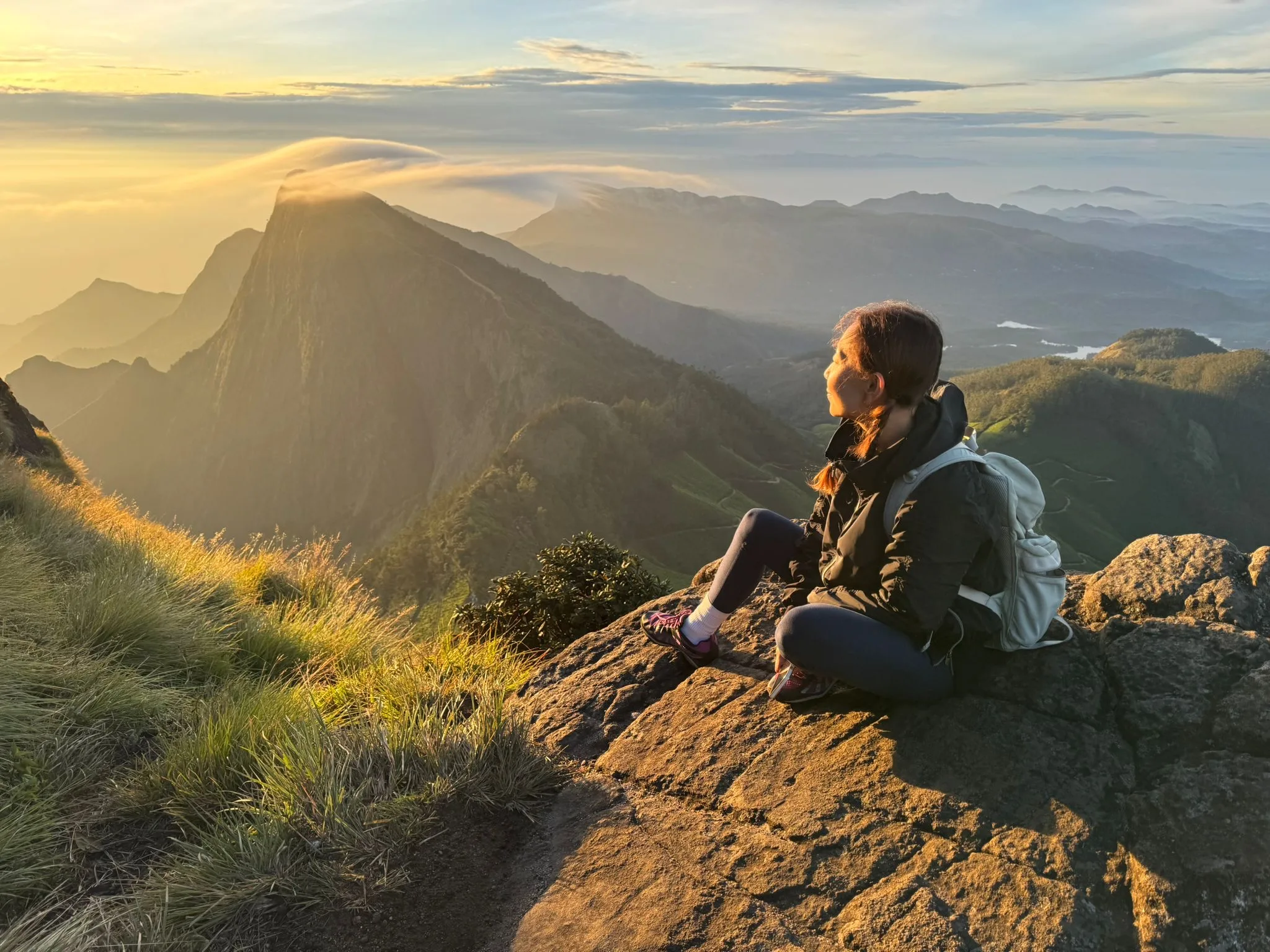
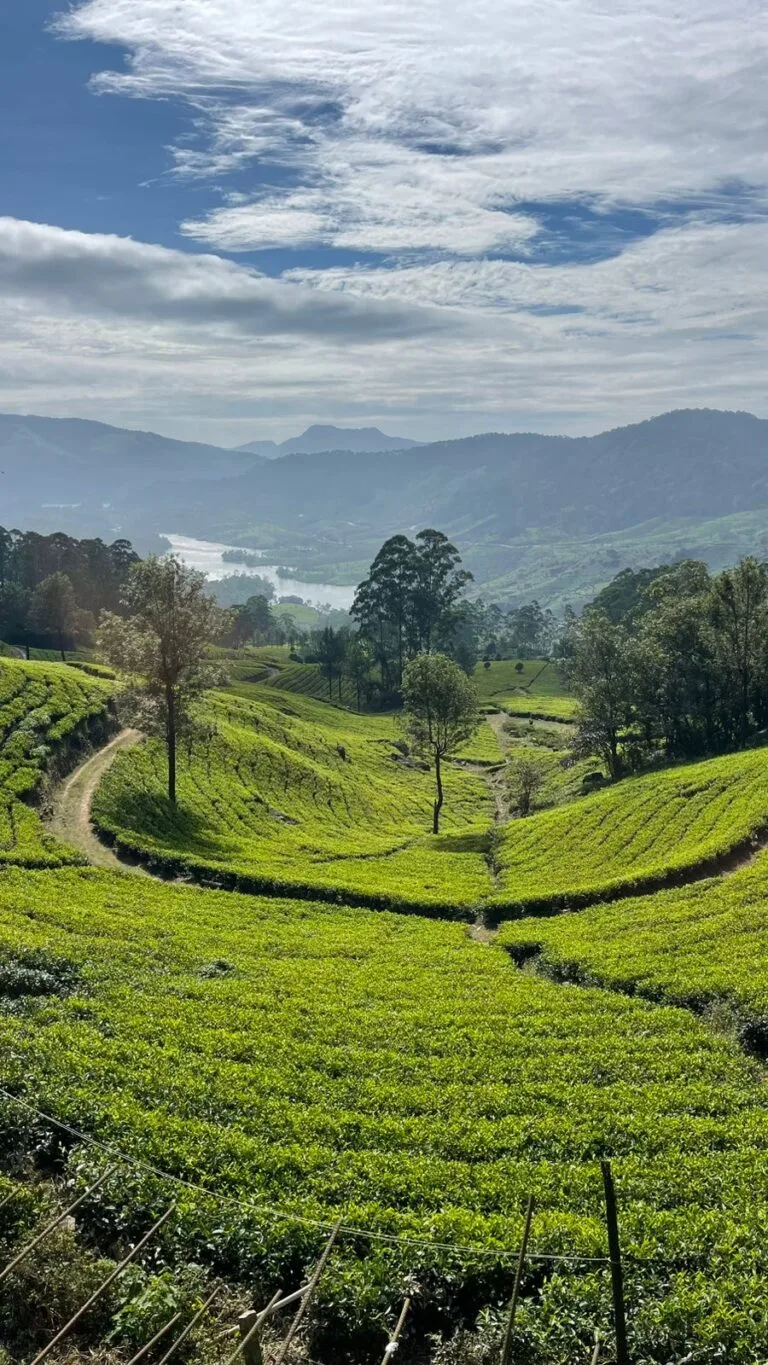
Because the state is compact, a week can hold real variety: an old port town like Fort Kochi, with its Portuguese, Dutch and British history and its Chinese fishing nets, then tea estates and forest at 1,600 metres in Munnar. The food is distinctive too, built on coconut, rice, spices and fresh fish.
Choose Kerala if you want your practice alongside Ayurveda, varied landscapes, strong food, and a gentler introduction to India.
Climate: the biggest practical difference
Rishikesh has cold, crisp winters, hot pre-monsoon months in May and June, and a heavy monsoon in July and August when road travel in the hills can be disrupted.
Kerala is warm all year. The southwest monsoon arrives in early June and eases through September, and the northeast monsoon brings afternoon showers in October and November. Munnar is always cooler than the coast. We wrote more about what each season feels like here.
Getting there
Rishikesh is usually reached by flying into Delhi or Dehradun and then driving several hours. Kerala is more direct for many travellers: Cochin International Airport (COK) has good connections through Gulf and Asian hubs, and Fort Kochi is well under two hours away.
Which is better for a first retreat?
If you've never been to India, Kerala tends to be the easier landing. English is widely spoken, distances are short, and the pace is calmer than north Indian cities. If you're specifically drawn to a big yoga-school culture, or you're heading towards a teacher training and want to be surrounded by that world, Rishikesh has more of it.
We should be honest about our bias: we run our retreats in Kerala, because it's home and because we think two days by the sea followed by five in the hills gives you a fuller week than staying in one place. You can see how our week is built and decide for yourself.